
Thermography — Non-Invasive Imaging for Early Detection & Prevention
Advanced Insight, Without Radiation
Thermography is a safe, radiation-free, and non-invasive imaging method that uses infrared technology to detect subtle changes in temperature and blood flow—often years before symptoms arise. It offers a unique way to visualize inflammation, dysfunction, and early signs of disease throughout the body.
Thermography is a safe, radiation-free, and non-invasive imaging method that uses infrared technology to detect subtle changes in temperature and blood flow—often years before symptoms arise. It offers a unique way to visualize inflammation, dysfunction, and early signs of disease throughout the body.
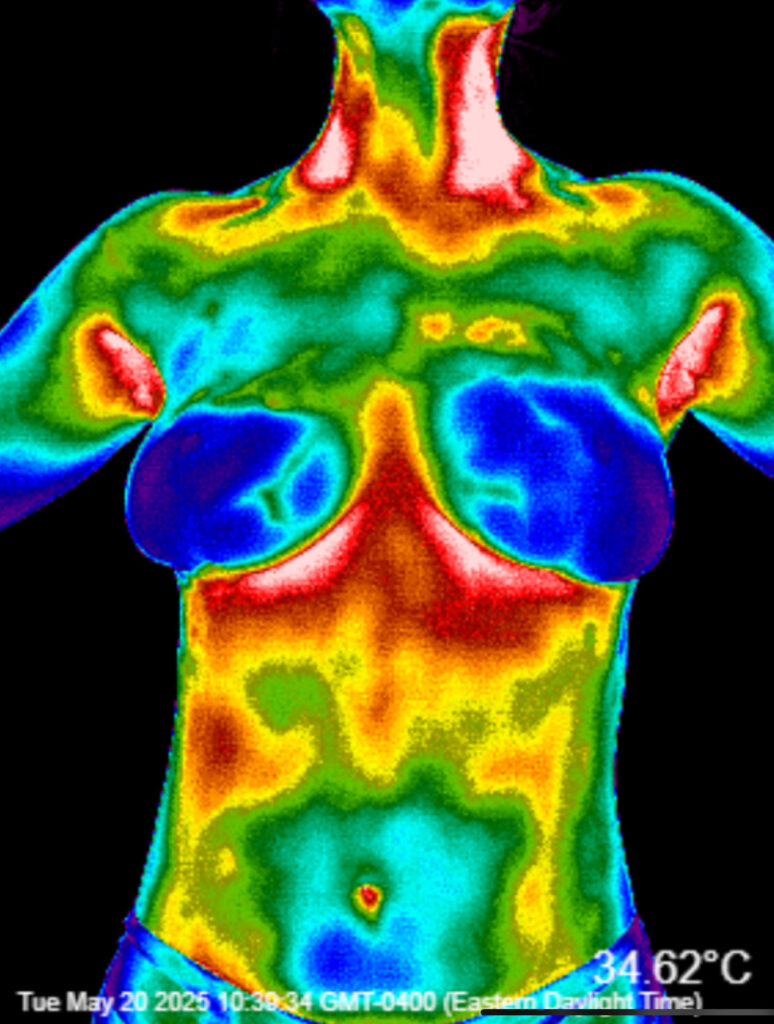
Why Choose Thermography?
- No radiation, compression, or contact
- 100% safe with no contraindications
- FDA approved as an adjunct diagnostic tool
- Detects functional changes up to 8–10 years earlier than traditional imaging
- Scans reviewed and interpreted by a Board-Certified Doctor
- Includes a detailed report with personalized recommendations
What Can Thermography Help With?
Thermal imaging can detect signs of:
- Breast health concerns (including early cancer detection & risk assessment)
- Cardiovascular inflammation & carotid artery flow issues
- Thyroid dysfunction & hormonal imbalances
- Joint pain, arthritis, disc issues, and nerve dysfunction
- Digestive and liver issues
- Lymphatic congestion & immune system imbalance
- Dental infections, sinus issues, TMJ, and more
Research-Based Advantages
- Higher detection accuracy in distinguishing benign from malignant breast conditions (92.7% accuracy vs 82% for mammography)
- 100% sensitivity for detecting abnormal heat patterns, indicating inflammation or disease
- No false reassurance from “normal” mammograms—thermography catches changes before symptoms arise
- Supports stroke assessment, joint pain analysis, and cardiovascular risk detection
Sources: National Library of Medicine / PubMed
Service Options & Pricing
HERS (Women’s Thermography)
- Full Body: Face, neck, skull, abdomen, full spine, breast, hips, legs, knees, feet, arms, and hands – $450
- Women’s Study: Face, neck, skull, abdomen, full spine, and breast – $350
- Breast Scan: Full front torso + 6 unique breast angle views – $250
- CervicoCranial: Face, throat, skull base, full spine, and dental views – $240
HIS (Men’s Thermography)
- Full Body: Face, neck, skull, abdomen, full spine, breast, hips, legs, knees, feet, arms, and hands – $450
- Men’s Screening: Face, neck, skull, abdomen, full spine, breast, prostate, and testicles – $325
- CervicoCranial: Face, throat, skull base, full spine, and dental views – $240
Frequently Asked Questions About Thermography
Thermography is a non-invasive imaging technique that detects heat patterns and blood flow in the body. Using an infrared camera, it captures temperature differences on the skin’s surface, which can indicate inflammation, changes in circulation, or other physiological responses. It is painless, quick, and does not involve radiation.
Yes, Thermography is completely safe. It uses infrared technology to read the skin’s heat signatures, meaning there is no exposure to radiation, compression, or dyes. It is a passive scan, making it suitable for people seeking a gentle, non-contact diagnostic option.
Thermography can highlight abnormal heat patterns that may be associated with inflammation, vascular changes, nerve irritation, or early warning signs of certain conditions. In the medaesthetic setting, it is often used as an additional wellness tool to support preventative care and guide further evaluation if needed.
Preparation is simple. Avoid heavy lotions, deodorants, or perfumes on the day of your appointment, and refrain from strenuous exercise or hot showers for a few hours before your scan. These factors can temporarily alter your skin’s temperature patterns, and we want the most accurate reading possible.

Book Your Thermography Appointment
Schedule your thermography scan today and take a proactive step toward early detection, better health insights, and peace of mind—without radiation or discomfort.